
When your unit won’t glow red or blows out right after ignition, start with three checks. Shut off the manual fuel valve, inspect the burner face for blockages or cracks, and clear shop dust from the air intake screen. The most common cause of combustion failure is a wrong air-to-fuel ratio. Blocked venturi openings or sudden drops in supply pressure usually cause it.
Continue reading “Industrial Infrared Gas Burner Troubleshooting Guide: Fixes”
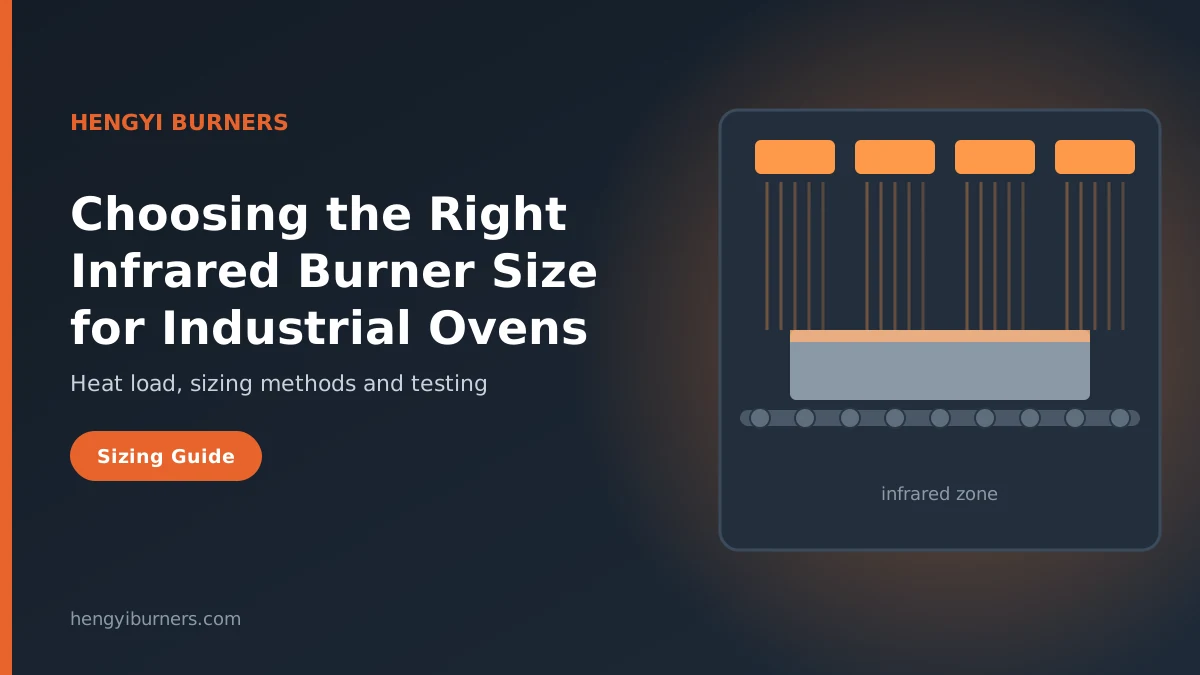
How to Choose the Right Infrared Burner Size for Industrial Ovens
Choosing the right infrared burner size for an industrial oven is determined by calculating the total heat load in BTUs per hour and matching that load to the chamber’s volume and insulation rating. If your oven operates at high temperatures, you must size for maximum throughput; if you only need gentle heat, you size for the minimum steady-state requirement. This varies by model — check the label for the manufacturer’s specified input range and thermal efficiency rating.
Continue reading “How to Choose the Right Infrared Burner Size for Industrial Ovens”
How to Maintain an Industrial Infrared Gas Burner: Expert Tips
You should clean the ceramic surface and inspect the burner plenum every 1,000 hours of operation to ensure peak efficiency. Maintaining an industrial infrared gas burner comes down to three routine jobs: removing dust buildup, checking the ceramic for cracks, and verifying gas pressure settings. If you leave these units for twice that duration, you risk uneven heating, carbon monoxide buildup, and eventual failure of the ceramic tiles. This schedule assumes a clean, indoor environment; if your facility has high airborne particulates, you must shorten the interval by half to prevent premature clogging.
Continue reading “How to Maintain an Industrial Infrared Gas Burner: Expert Tips”
How to Choose a Honeycomb Ceramic Burner Plate for Your System
To pick the right component for your gas system, you must match the hole density and material thermal rating to your burner’s specific BTU output, so the plate delivers reliable, even heat. This guide explains how to verify compatibility, select the correct size, and install the plate to ensure safe operation without damaging your equipment.
Continue reading “How to Choose a Honeycomb Ceramic Burner Plate for Your System”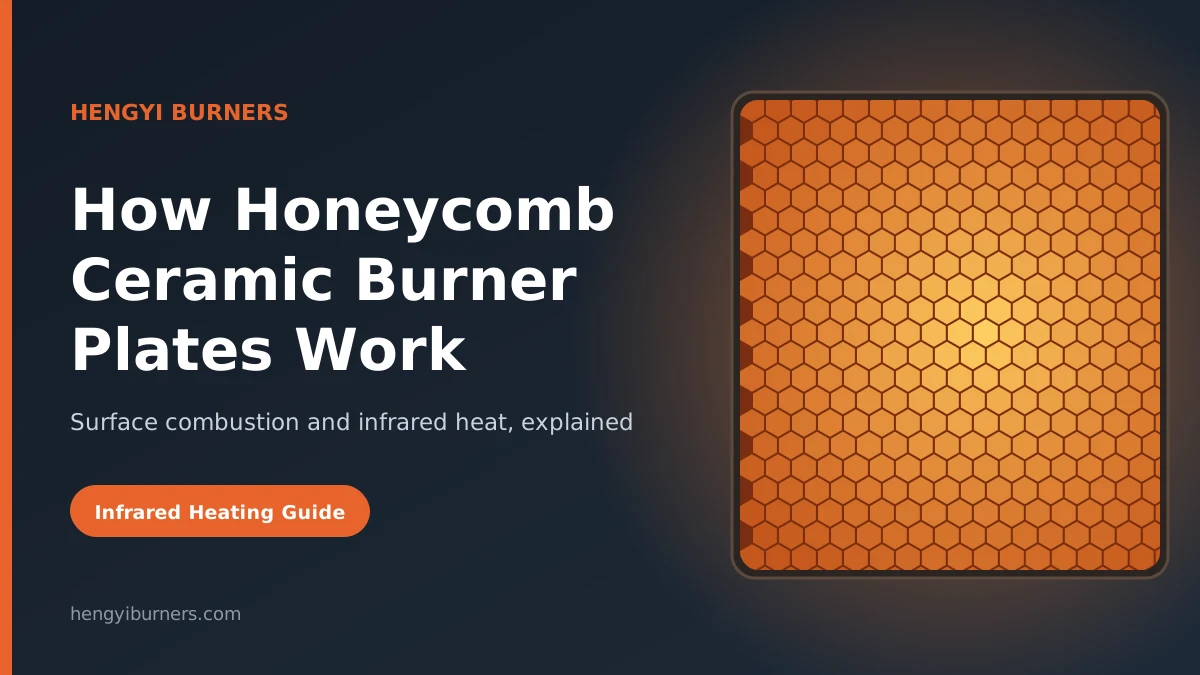
How Honeycomb Ceramic Burner Plates Work in Infrared Heating
Honeycomb ceramic burner plates turn gas into intense infrared heat. A gas-air mixture flows through thousands of tiny channels and burns right at the plate surface. The ceramic then glows red-orange and radiates heat straight to the product. This makes the plates a good fit for industrial dryers, curing ovens and commercial heaters.
Continue reading “How Honeycomb Ceramic Burner Plates Work in Infrared Heating”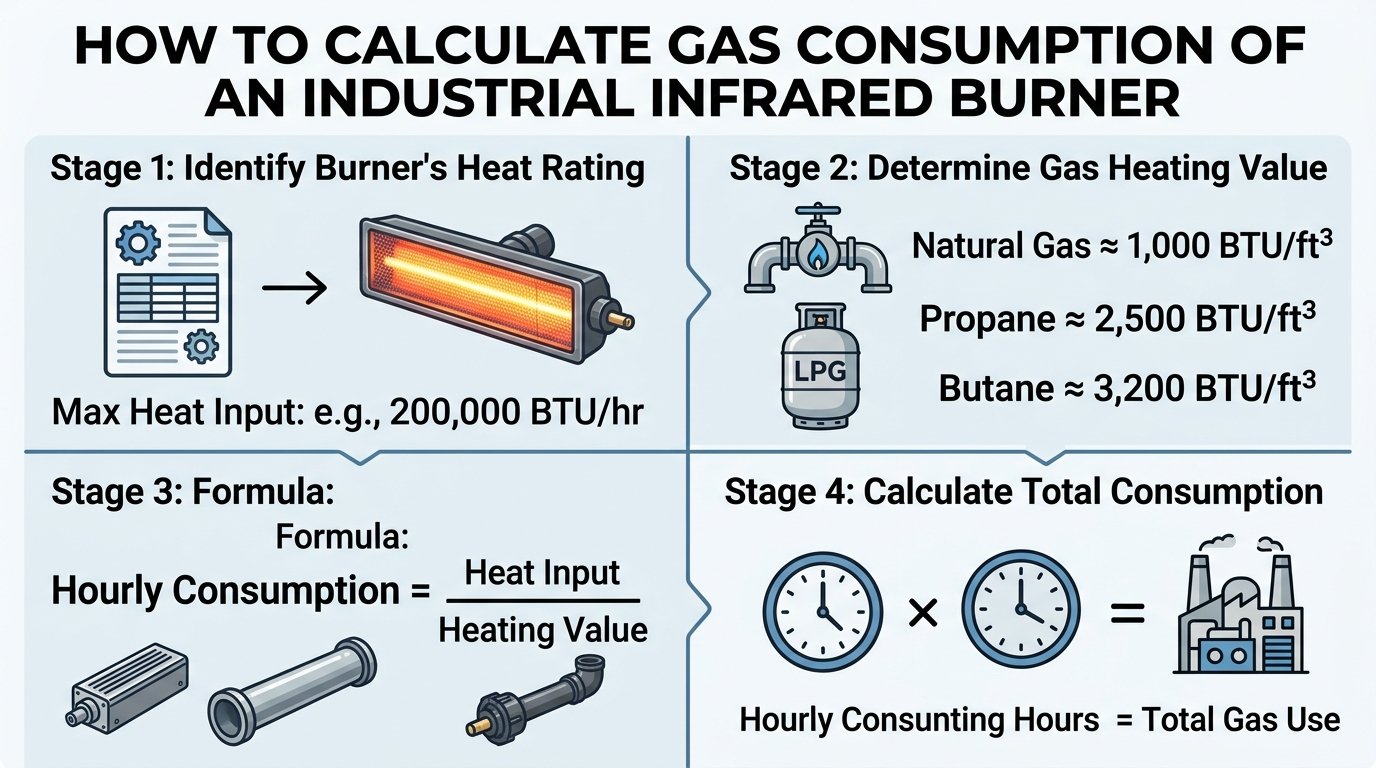
How to Calculate Gas Consumption of an Industrial Infrared Burner
To find the gas consumption of an industrial infrared burner, divide its heat output by your fuel’s energy content. You only need the nameplate rating and your gas’s heating value. With your equipment manual and a recent utility bill, the job takes about 15 minutes.
Continue reading “How to Calculate Gas Consumption of an Industrial Infrared Burner”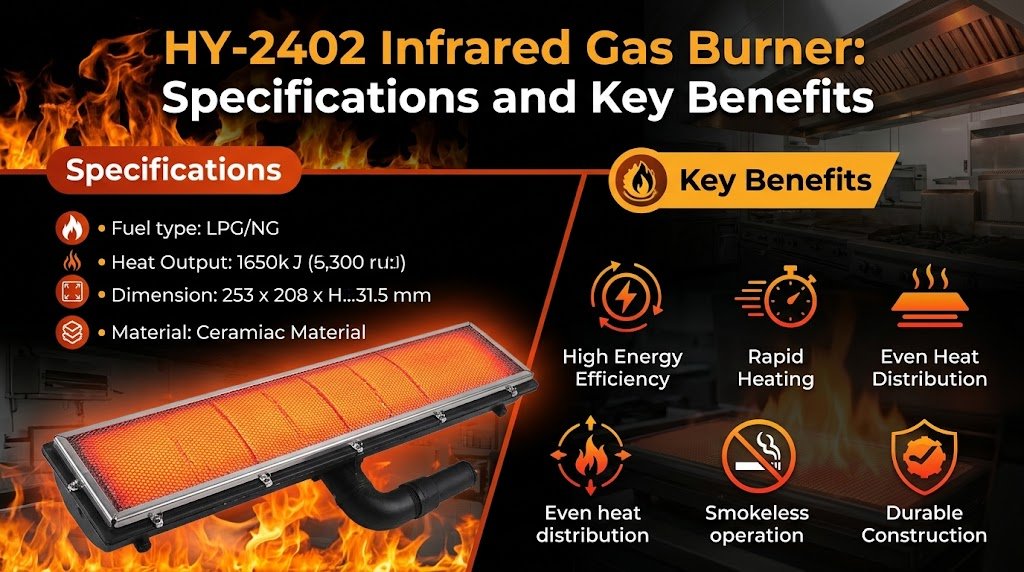
HY-2402 Infrared Gas Burner: Specifications and Key Benefits
The HY-2402 infrared gas burner provides high-efficiency heat transfer by converting gas energy into infrared radiation, which directly warms objects rather than the surrounding air. This device uses a ceramic plate with thousands of tiny holes to create a flameless, glowing surface that reaches high temperatures quickly. It’s commonly used in industrial drying, food processing, and heating systems where precise, even thermal output is needed. By minimizing convective heat loss, the burner improves energy usage compared to traditional open-flame systems, making it a reliable tool for professional thermal applications.
Continue reading “HY-2402 Infrared Gas Burner: Specifications and Key Benefits”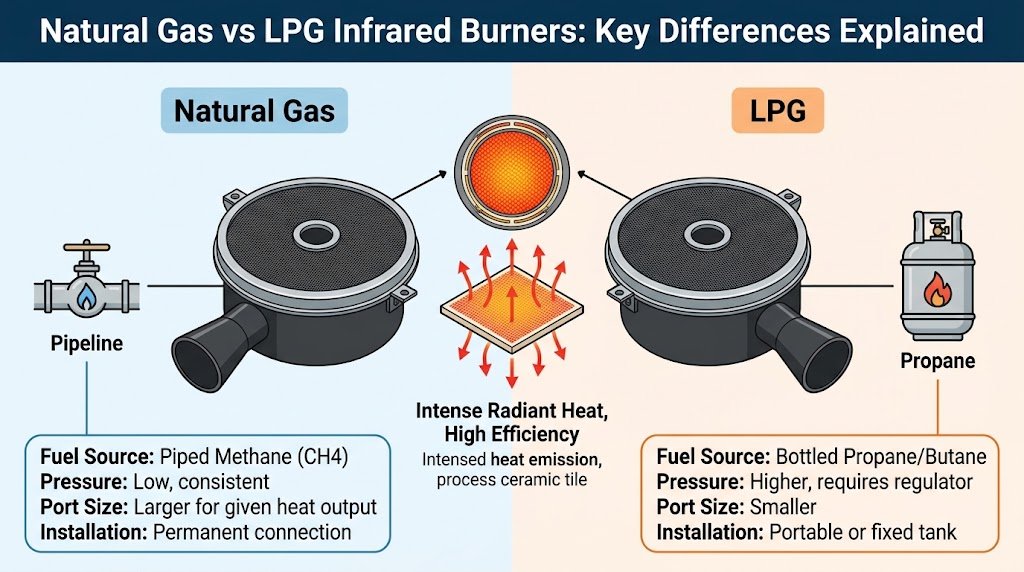
Natural Gas vs LPG Infrared Burners: Key Differences Explained
The main difference between natural gas and LPG infrared burners is fuel delivery pressure and orifice size, which together control how each gas burns through the ceramic or metal mesh. Natural gas requires a larger orifice because it has lower energy density, while LPG is denser and needs a smaller opening to prevent flare-ups. If you’re choosing between them, remember that the gas supply lines in your home aren’t interchangeable without professional conversion.
Continue reading “Natural Gas vs LPG Infrared Burners: Key Differences Explained”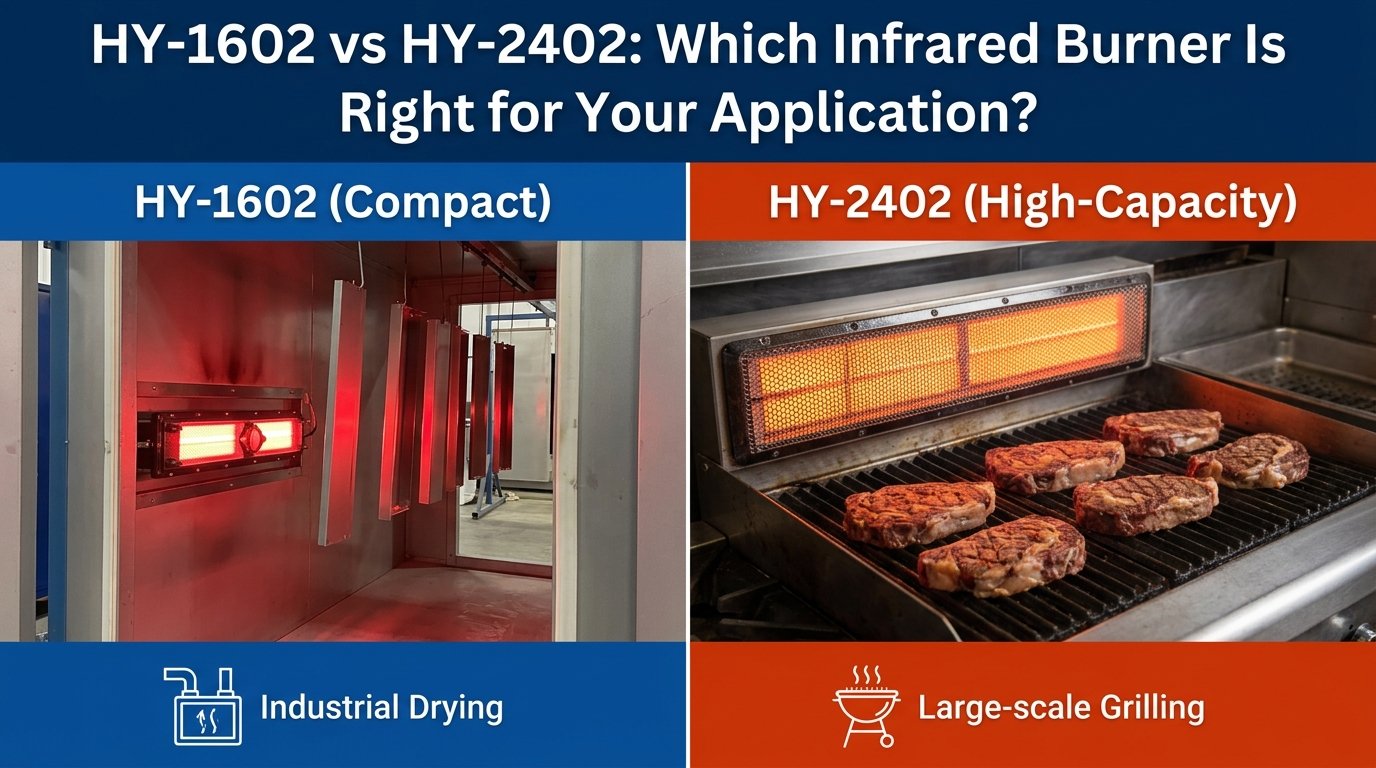
HY-1602 vs HY-2402: Which Infrared Burner Is Right for Your Application?
The HY-1602 is the better choice for smaller, residential grilling setups, while the HY-2402 is the stronger option for high-volume commercial searing. The right choice depends on the surface area you need to cover and your total heat output requirements. Selecting the right burner determines how evenly your food cooks and how much fuel you consume. If you have a compact grill, the smaller unit is sufficient; if you’re cooking for a crowd, the larger model is necessary.
Continue reading “HY-1602 vs HY-2402: Which Infrared Burner Is Right for Your Application?”