
You should clean the ceramic surface and inspect the burner plenum every 1,000 hours of operation to ensure peak efficiency. Maintaining an industrial infrared gas burner comes down to three routine jobs: removing dust buildup, checking the ceramic for cracks, and verifying gas pressure settings. If you leave these units for twice that duration, you risk uneven heating, carbon monoxide buildup, and eventual failure of the ceramic tiles. This schedule assumes a clean, indoor environment; if your facility has high airborne particulates, you must shorten the interval by half to prevent premature clogging.
When to service your industrial infrared burner
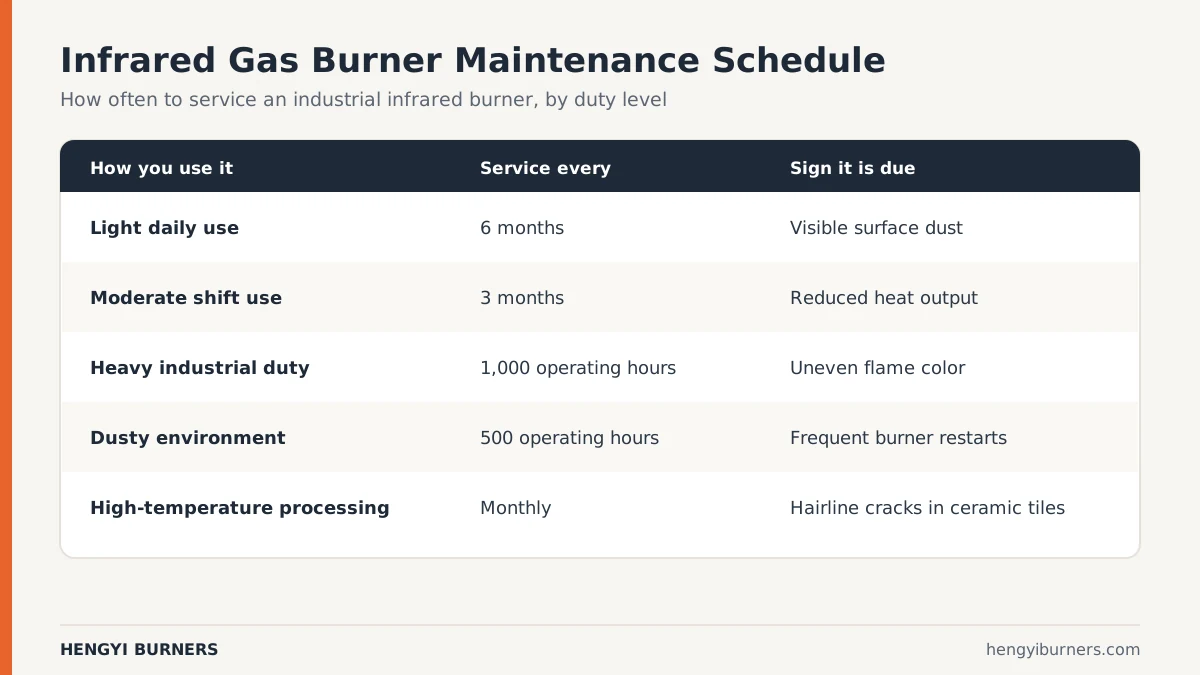
| How you use it | How often | What tells you it’s due |
|---|---|---|
| Light daily use | Every 6 months | Visible surface dust |
| Moderate shift use | Every 3 months | Reduced heat output |
| Heavy industrial duty | Every 1,000 hours | Uneven flame color |
| Dusty environment | Every 500 hours | Frequent burner restarts |
| High-temp processing | Monthly | Ceramic tile hairline cracks |
If you notice a yellow flicker rather than a sharp blue cone, your air-to-fuel ratio is likely compromised by internal soot buildup. Don’t wait for the scheduled interval if the flame changes color.
Most operators make the mistake of ignoring the “frequent restart” warning. This failure costs you significantly in igniter lifespan, as the constant cycling burns out the heating element three times faster than steady operation.
Use this simple decision rule: if the burner reaches operating temperature 20% slower than when it was new, perform a deep cleaning immediately. If the ceramic tiles show cracks wider than a fingernail, replace them before the next shift. Ignoring these signs forces the blower to work harder, which eventually leads to a total motor burnout. Always prioritize visual inspections over the calendar.
Consequences of Neglected Maintenance
Ignoring your burner maintenance leads to a predictable sequence of degradation that starts with minor efficiency losses. Initially, dust and debris accumulate on the ceramic emitter surface, which blocks the infrared radiation from escaping. This forces the burner to work harder to reach the target temperature, increasing your fuel consumption. Because the heat can’t exit, it reflects back into the burner body, raising the internal temperature of the plenum and the gas-air mixing chamber.
After several months of neglect, you’ll notice the flame pattern changing from a consistent, glowing orange or red to a patchy, uneven surface glow. This shift indicates that the gas-air mixture is no longer uniform across the burner face. You might also notice a slight odor of unburnt gas during startup, which is a sign that the burner is struggling to maintain proper combustion.
If you see soot buildup on the surrounding housing, the burner is likely running rich. This indicates that the air intake ports are obstructed. If the surface glow remains patchy or uneven after cleaning the intake, you’re dealing with a faulty gas regulator rather than simple debris.
If you continue to operate the unit in this state, the thermal stress will eventually cause the ceramic tiles to crack or crumble. Once the ceramic is damaged, you lose the ability to focus the infrared heat, which ruins your product quality. At this point, the burner usually requires a complete replacement of the ceramic matrix rather than a simple cleaning.
This mistake is costly, as it involves significant downtime and expensive spare parts. Operators who ignore these early warnings often face repair bills 60% higher than the cost of routine preventative service. A well-maintained burner should last for years, but a neglected one often fails after only a few thousand hours of operation.
Signs Your Burner Needs Attention
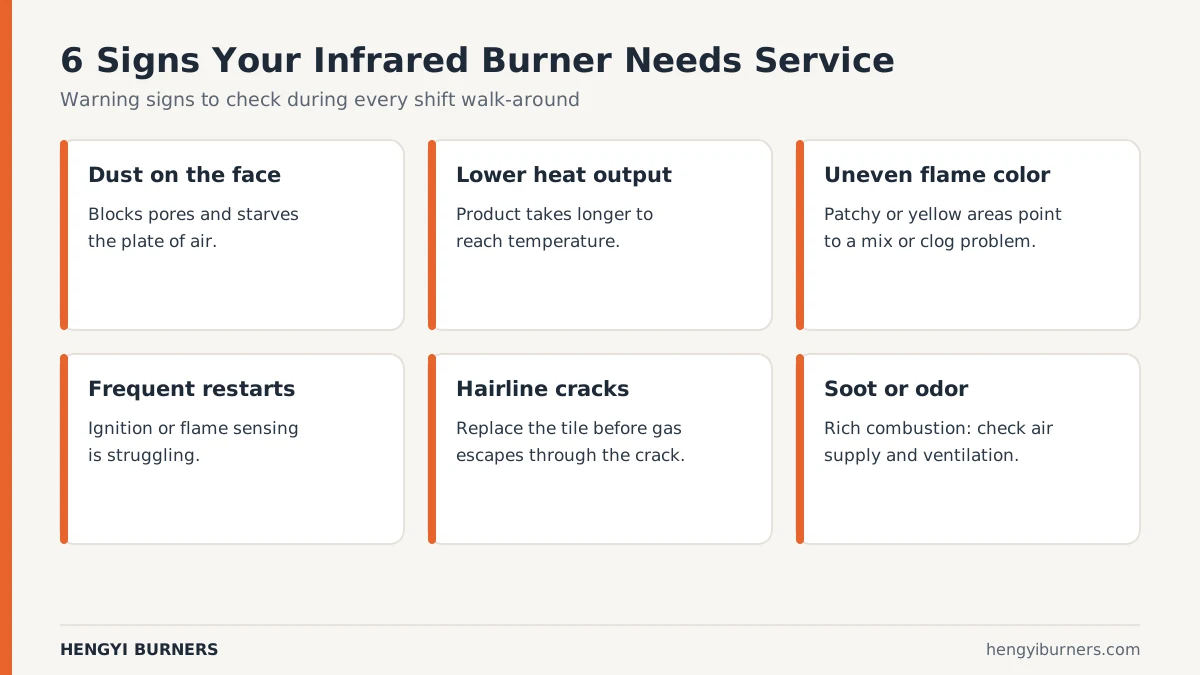
Visible soot or ash on the ceramic surface indicates incomplete combustion. This buildup acts as an insulator, forcing the burner to work harder to reach target temperatures. If you see black flakes, clean the ports immediately. Failure to act leads to carbon monoxide buildup.
A “popping” noise during startup suggests a faulty ignition or a clogged nozzle. This sound occurs when fuel accumulates before igniting. If the pop is loud enough to vibrate the housing, shut off the gas supply and check for a cracked igniter.
Uneven surface glow means gas isn’t flowing equally through all ports. A healthy burner glows a consistent, dull orange. Dark spots indicate blocked orifices, which cause thermal stress on the surrounding metal.
Higher fuel bills for the same output show the burner is losing efficiency. Track your monthly usage against the previous year. A 10% spike without a change in production suggests a failing regulator.
Yellow-tipped flames are a clear indicator of a rich fuel-to-air mixture. A consistent, uniform orange or red glow across the ceramic surface signifies proper combustion. If the surface glow remains yellow or uneven, adjust the air shutter to correct the fuel-to-air ratio.
Cracked or missing ceramic chunks mean the burner structure is compromised. These gaps allow raw fuel to bypass the combustion zone. If the crack exceeds one-eighth of an inch, replace the entire burner assembly to prevent a dangerous flare-up.
Steps for Routine Burner Care
Maintaining these systems requires only a few simple tools, such as a vacuum with a soft brush attachment and a low-pressure compressed air line. You should plan to spend about one hour per burner during a scheduled shutdown. First, ensure the gas supply is locked out and the unit is completely cool to the touch. Use the vacuum to gently remove loose dust from the ceramic face; never use a wire brush or harsh metal tools, as these will scratch and damage the fragile ceramic material.
Most technicians make the mistake of using high-pressure shop air. This force drives particulates deep into the ceramic pores, causing uneven combustion and eventual cracking. If you can’t regulate your air supply below 30 PSI, stick to the vacuum brush.
Next, inspect the air intake and the venturi tube for blockages. If you see debris, blow it out using low-pressure compressed air directed away from the ceramic face. Check all gas connections for leaks using a leak detection solution, and verify that the flame-sensing rod is clean and free of oxidation. If you find the rod is coated in a heavy layer of carbon, you can lightly sand it with fine-grit abrasive paper.
Finally, check the manufacturer’s documentation to verify the required gas pressure settings. This varies by model; check the label on the side of your burner housing to confirm the correct millibar or water column pressure. If you don’t have the manual, look for the data plate attached to the burner frame. When the pressure is outside the manufacturer’s specified range, you must adjust the regulator before restarting the system. If the pressure remains unstable after adjustment, replace the regulator diaphragm, as a failing spring will prevent consistent heat output.
Habits to Extend Burner Life
-
Install high-quality air filters on your intake fans to keep dust out of the plenum. Aim for a MERV 13 rating or higher. This prevents fine particulates from coating the internal nozzles, which otherwise causes uneven flame patterns and localized overheating.
-
Monitor gas pressure daily to catch regulator drift before it impacts the burner tiles. If your gauge shows a variance greater than the manufacturer’s specified tolerance, recalibrate the regulator immediately. Ignoring this drift causes the burner to run lean, eventually cracking the ceramic tiles.
-
Avoid rapid temperature cycling by ramping up the heat slowly to reduce thermal shock. Increase the setpoint by no more than 50 degrees Fahrenheit every ten minutes.
-
Keep the area clean by sweeping around the intake zones to reduce airborne debris. A buildup of just one millimeter of dust can insulate the burner, forcing it to work 15% harder to maintain temperature.
Frequently asked questions
How often should I inspect my gas burner for cracks?
You should inspect the burner face for cracks every time you perform a scheduled cleaning, which is usually every 1,000 hours of operation. If your process involves rapid temperature changes or thermal shock, perform a visual check once a month. Small hairline cracks are common, but if you see pieces of ceramic missing or large gaps, the burner is no longer safe to operate and requires immediate replacement.
Can I use water to clean the ceramic surface?
No, you should never use water or liquid cleaning agents on an infrared burner. The ceramic material is porous, and moisture trapped inside will turn into steam when the burner is ignited, causing the tile to explode or shatter. Always use a dry method like a vacuum or low-pressure compressed air to remove surface dust. If the burner is heavily contaminated with oils or grease, contact the manufacturer for specific cleaning recommendations.
Is it safe to operate a burner with a yellow flame?
No, a yellow flame indicates incomplete combustion, which is a sign of a dangerous buildup of carbon monoxide. If you see yellow flames, shut the burner down immediately, lock out the gas supply, and inspect the air intake for blockages. You must ensure the gas-air ratio is correct before restarting the unit. If the flame remains yellow after cleaning the intake, contact a professional technician to check the gas pressure regulators.
How long does an industrial infrared burner usually last?
Industrial infrared burners typically last three to five years with daily use and proper maintenance. Lifespan depends heavily on facility air cleanliness and thermal cycling frequency. Neglecting maintenance intervals may cause ceramic tiles to fail within one year due to stress and debris.
Does it matter if my gas pressure is slightly off?
Yes, gas pressure matters because even small deviations alter the fuel-air mix and burner temperature. Incorrect pressure prevents required heat or risks damaging the ceramic and creating dangerous combustion byproducts. Always use a calibrated gauge to verify settings against the manufacturer’s plate to prevent system failure.
What happens if I skip the vacuuming step?
Skipping vacuuming allows dust to block ceramic pores, which creates hot spots and causes uneven heating. These hot spots eventually lead to cracking of the ceramic material. Once the ceramic cracks, the burner loses efficiency and requires a costly replacement of the entire tile assembly.
Burner Maintenance: Summary
Always start your maintenance by verifying that the gas line is locked and the unit is fully cooled to prevent accidental burns. You should notice that the burner maintains a steady, even glow across the entire surface once the cleaning is finished.
Get the Right Parts from Hengyi Burners
Hengyi Burners manufactures infrared gas burners and burner components in Zhaoqing, China. We stock replacement honeycomb ceramic plates, ignition needles and ignition controllers, plus complete infrared gas burners. Contact our team with your fuel type, supply pressure and heating area, and we will recommend a setup and send a quote.
Related guides
4 thoughts on “How to Maintain an Industrial Infrared Gas Burner: Expert Tips”