
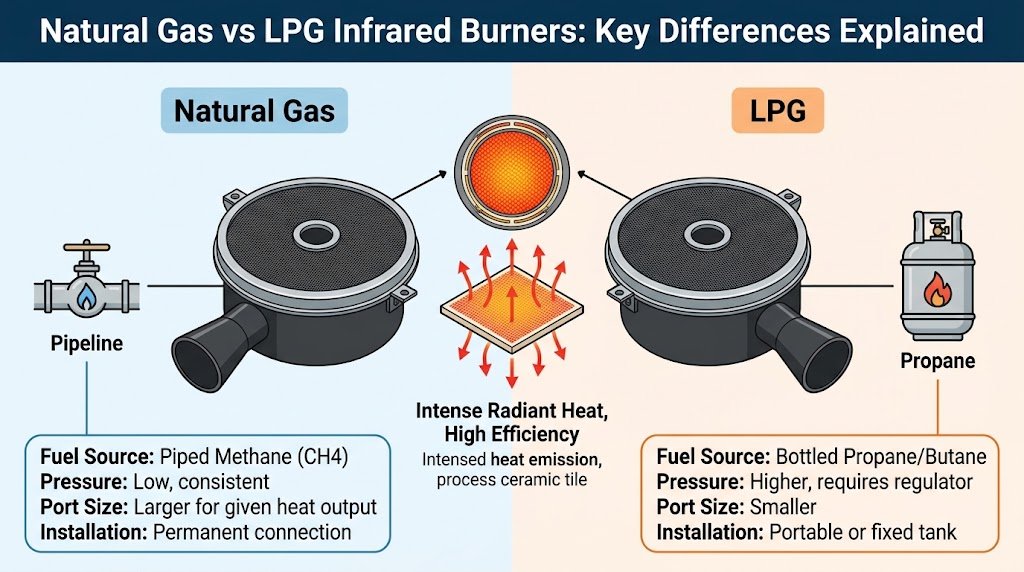
The main difference between natural gas and LPG infrared burners is fuel delivery pressure and orifice size, which together control how each gas burns through the ceramic or metal mesh. Natural gas requires a larger orifice because it has lower energy density, while LPG is denser and needs a smaller opening to prevent flare-ups. If you’re choosing between them, remember that the gas supply lines in your home aren’t interchangeable without professional conversion.
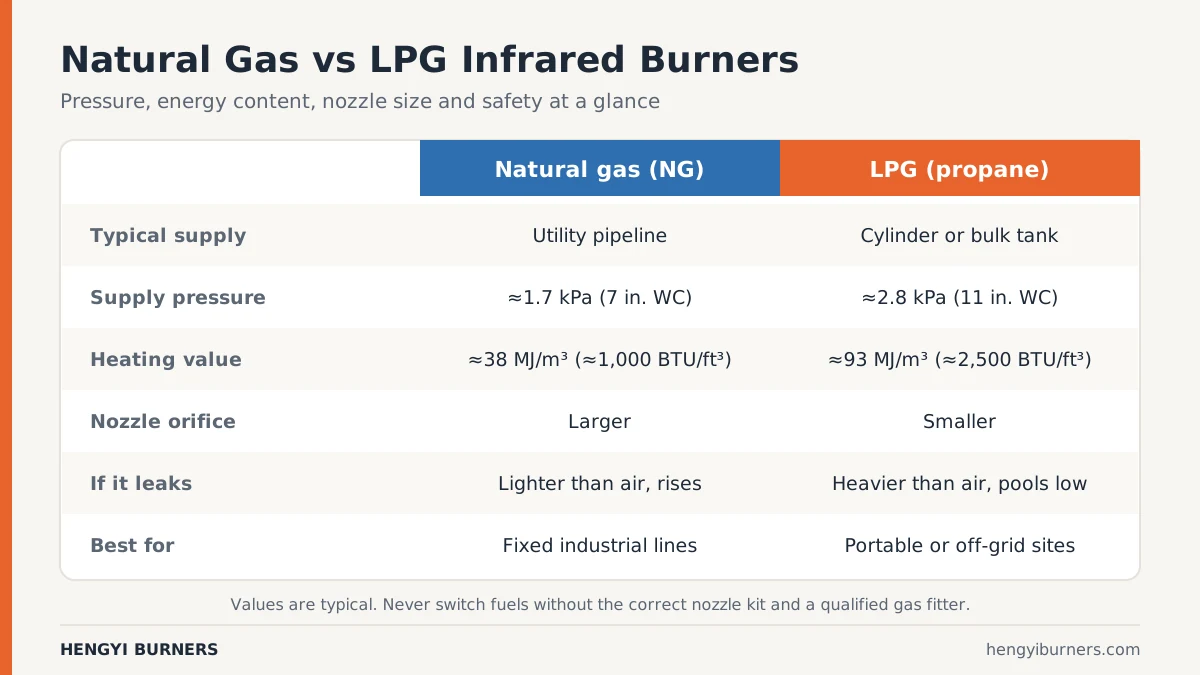
Key differences between infrared burners
The choice between these systems depends on your existing home infrastructure and how much you plan to cook outdoors.
| Method | How long | Effort | Cost | Best for |
|---|---|---|---|---|
| Natural Gas | Permanent | High | High | Fixed kitchens |
| LPG Cylinder | Immediate | Low | Low | Portable grills |
| Conversion Kit | Variable | Medium | Medium | Changing fuels |
Most homeowners find that using an existing natural gas line is more convenient because it eliminates the need to swap tanks. However, LPG remains the standard for portability. Always remember that this varies by model — check the label on the back of your unit to confirm the gas type it was factory-set to use.
Fixed pipeline integration
Using natural gas involves connecting your burner to the main supply line of your home.
- Shut off the main gas valve to the specific branch line you intend to use.
- Install a dedicated shut-off valve near the burner location for safety.
- Connect the gas line using approved, leak-tested piping.
- Verify the gas pressure with a manometer to ensure it matches the burner specifications.
This method is ideal for permanent outdoor kitchens where you want to avoid the hassle of refilling tanks. It offers a consistent, high-heat output without interruption. A common mistake people make is using standard rubber hoses instead of the rigid, code-compliant piping required for natural gas, which can lead to leaks or fire hazards. If you don’t have experience with gas plumbing, hire a licensed professional. Any errors during installation can create a significant risk to your home and insurance coverage.
Portable tank systems
LPG burners operate using propane stored in pressurized steel cylinders, which are common for mobile grilling setups.
- Inspect the regulator and hose for any cracks or signs of wear.
- Attach the regulator firmly to the tank valve by turning it clockwise.
- Open the tank valve slowly to allow pressure to build in the hose.
- Press the igniter button while slowly turning the burner control knob to the high setting.
This setup is best for users who need to move their grill across a patio or take it to different locations. It provides a very high energy output, as propane is more concentrated than natural gas. One trade-off is the need to monitor tank levels, as running out of fuel mid-cook is a regular occurrence for heavy users. If you see ice forming on the regulator, it means the tank is drawing fuel too quickly for the ambient temperature.
Adjusting for fuel changes
Conversion kits allow you to switch a burner from one gas type to another by replacing the internal orifices.
- Identify the correct conversion kit specific to your burner model number.
- Unscrew the existing brass orifice using a thin-walled socket wrench.
- Install the new orifice, ensuring it’s seated tightly but not over-tightened.
- Place the conversion warning sticker on the unit to alert future users.
This method is useful if you move to a new home that lacks a natural gas line. It saves you from buying a new appliance, though it requires precision. If you’re doing this for the first time, have an assistant hold a flashlight so you can see the small threading clearly. A mistake here often involves using the wrong-sized wrench, which strips the brass fitting and makes it impossible to remove later.
Which one should you use?
Choosing the right gas type depends entirely on your setup and your goals. If you’re in a hurry, choose LPG because it’s a “plug and play” solution that requires no plumbing. You simply attach the tank and start cooking within minutes.
If you’re doing this for the first time, choose LPG because the equipment is portable and easier to troubleshoot. Natural gas systems involve permanent lines that are harder to fix if a connection is loose or leaking.
If you want the best possible result whatever it takes, choose Natural Gas. It provides a constant, limitless supply of fuel, which is essential for long-duration cooking sessions or professional-grade infrared searing. This trade-off is simple: pay for the installation of a natural gas line once to enjoy years of convenience, or stick with LPG for lower upfront costs and total mobility. Always check the manufacturer’s manual for your specific burner to ensure you’re using the correct pressure for the gas type you have selected.
The rules that apply whichever way you choose
Regardless of the fuel source, you must follow strict safety protocols. First, always perform a leak test using a soap-and-water solution on all connections before the first use. If you see bubbles, the connection isn’t tight. Second, ensure your burner is placed in a well-ventilated area, as infrared burners consume oxygen quickly and can produce carbon monoxide if the airflow is blocked.
Third, check the flame color periodically; it should be blue. A yellow or orange flame indicates incomplete combustion, often caused by debris or an incorrect air-to-fuel ratio. If you see a yellow flame, shut off the gas and clean the burner ports. If you suspect a leak, evacuate and call your utility provider.
Get the Right Parts from Hengyi Burners
Hengyi Burners manufactures infrared gas burners and burner components in Zhaoqing, China. See the HY-1602 infrared gas burner and HY-2402 infrared gas burner, or browse all infrared gas burners. Contact our team with your fuel type, supply pressure and heating area, and we will recommend a setup and send a quote.
Related guides
One thought on “Natural Gas vs LPG Infrared Burners: Key Differences Explained”