

Honeycomb ceramic burner plates turn gas into intense infrared heat. A gas-air mixture flows through thousands of tiny channels and burns right at the plate surface. The ceramic then glows red-orange and radiates heat straight to the product. This makes the plates a good fit for industrial dryers, curing ovens and commercial heaters.
Essential Components of Ceramic Burners
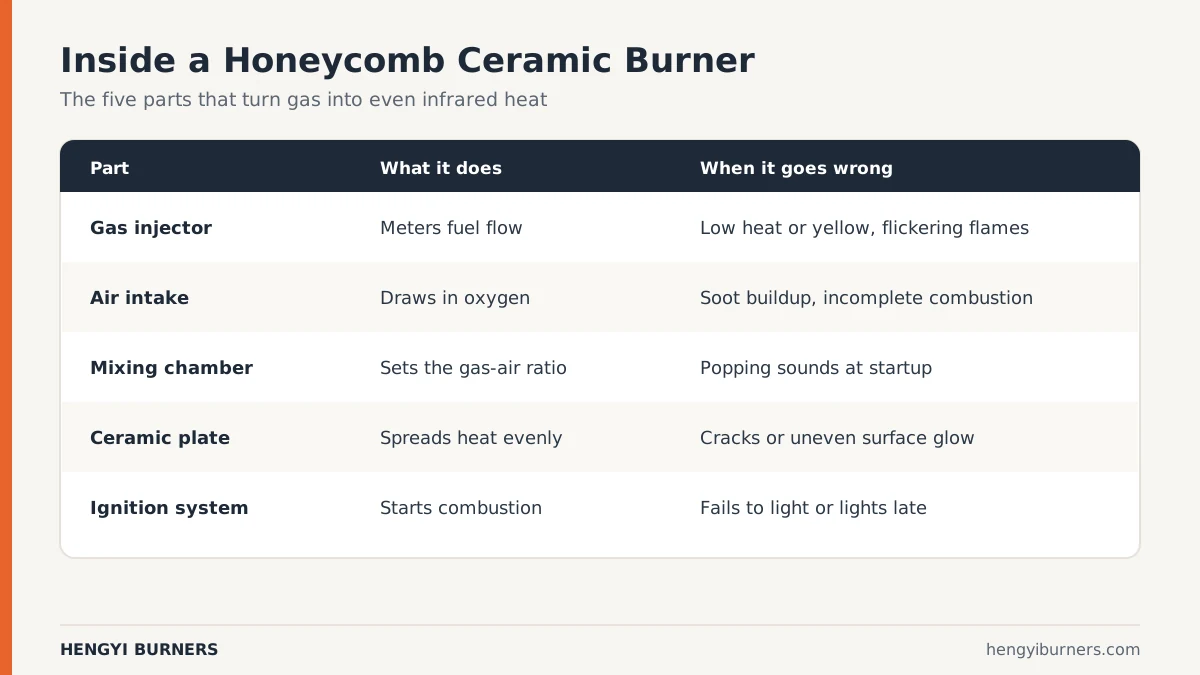
The ceramic plate is the heart of the system. For this reason, it has to survive repeated thermal shock and still keep gas and air flowing evenly. When the plate cracks or clogs, the mixture stops burning evenly across the surface and efficiency drops.
| Part or input | What it does | What you notice when it goes wrong |
|---|---|---|
| Ceramic Plate | Distributes heat evenly | Cracks or uneven surface glow |
| Gas Injector | Meters fuel flow | Low heat or yellow flickering flames |
| Air Intake | Mixes oxygen with gas | Soot buildup or incomplete combustion |
| Mixing Chamber | Prepares gas-air ratio | Popping sounds during startup |
| Ignition System | Starts the reaction | Failure to light or delayed ignition |
However, a common mistake is ignoring hairline fractures in the ceramic plate.
Check the data plate on the burner frame or the manual for your unit’s pressure requirements. Also, if the plate glows in patches instead of evenly, something is probably blocking the mixing chamber.
Use this quick check. An even red-orange glow means the mixture is right. Yellow or orange flames lifting off the plate usually mean dust or debris is blocking the air intake. Clear the intake ports with compressed air before carbon builds up on the ceramic for good.
Stages of Infrared Combustion
From Injector to Plenum
- Gas enters through the injector nozzle at a set pressure, usually measured in inches of water column. The regulator controls this pressure. If the flow seems off, compare it with the range in your manual.
- As the gas moves through the venturi tube, it pulls in primary air. This creates a mixture lean enough to avoid a yellow flame, and it happens in a fraction of a second. Yellow tips usually mean dust or spider webs are blocking the venturi. The burner then runs rich and makes soot.
- Next, the mixture fills the plenum, the space right behind the ceramic plate. The plenum spreads pressure evenly across thousands of holes. Uneven pressure creates hot spots, and hot spots crack the ceramic early.
Surface Combustion and Infrared Output
- The mixture then flows out through the tiny channels in the ceramic. At the outer surface it reaches its ignition point and burns as surface combustion. The burn usually settles within about sixty seconds of the first spark.
- Once the ceramic passes about 1,500 °F, it gives off strong infrared radiation. These waves heat solid objects in their path rather than the air around them. That direct transfer is the main benefit of infrared heating.
- The burner stays in this state as long as gas flow and air supply hold steady. If gas pressure drops, combustion can retreat into the ceramic holes and damage the plate. Hear a hissing sound? Shut off the gas right away.
Performance Issues and System Failure
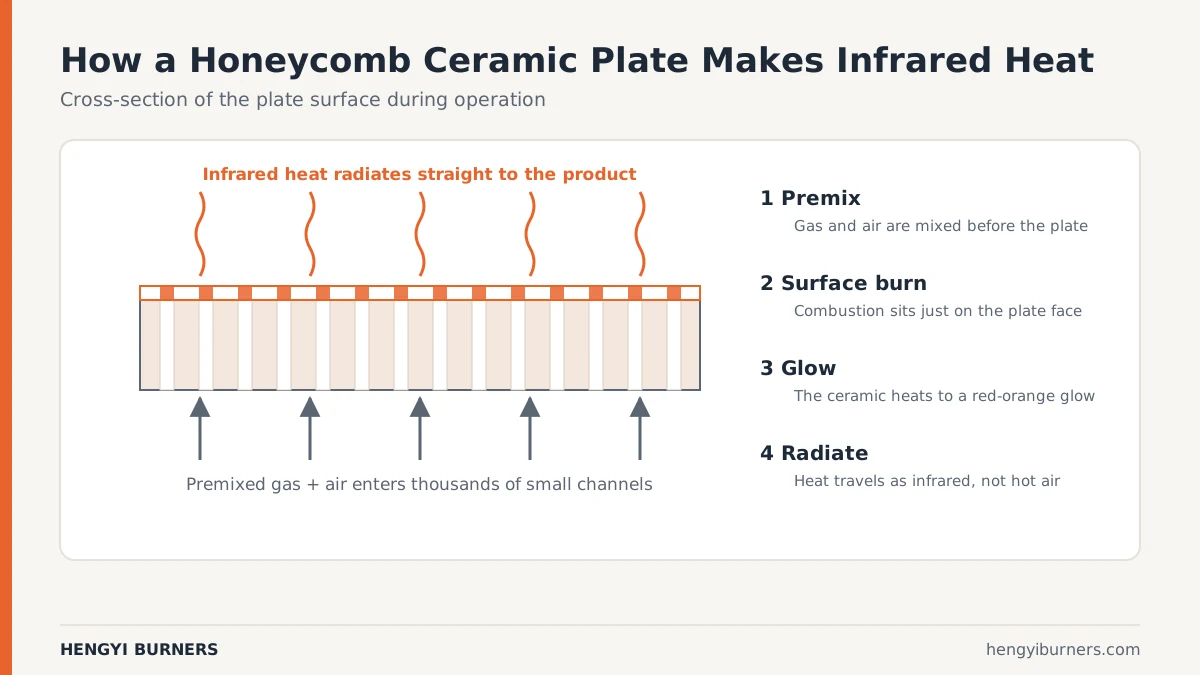
Surface combustion depends on the right fuel-to-air ratio. In a healthy burner, gas burns right at the face of the ceramic. This keeps the flame out of the internal holes, where it would overheat and crack the plate.
Flashback From Low Gas Pressure
If gas pressure falls too low, the flame can “flash back” into the burner. The sudden, concentrated heat then cracks the ceramic. Users often cause this by running a heater on a low-pressure tank or a partly blocked supply line. The mistake can cost the whole burner assembly, because the heat destroys the gas distribution manifold inside.
Cracks and Hot Spots
The ceramic plate also works as a thermal barrier. It keeps combustion heat away from the parts inside the mixing chamber. Even a hairline crack breaks this barrier. You’ll see it as a bright, white-hot spot where gas escapes through the crack and burns outside the normal surface.
The ceramic around the crack then runs cooler, which creates thermal stress. Over time, that stress can shatter the whole plate. If the hot spot comes back after you relight the burner, replace the plate.
Safety and Ventilation
Because these burners run so hot, safety standards are strict. You need good ventilation so carbon monoxide from incomplete combustion can’t build up in enclosed spaces. The ANSI Z83.26 standard sets test requirements for gas-fired infrared patio heaters, including how materials hold up to daily thermal cycling.
If you smell gas, or yellow flames rise more than an inch above the ceramic, turn the system off and call a qualified technician. Don’t try to repair a cracked plate. The ceramic has a specific porosity and thermal expansion that adhesives and patches can’t match. Epoxy in a crack traps heat, and the ceramic can burst the next time you light it.
Operational Limits and Maintenance
User Controls
- Gas pressure regulator settings.
- Air intake vent adjustments.
- Ignition start-up sequence.
- Cleaning of dust from the intake.
Fixed Design Limits
- Ceramic plate porosity levels.
- Thermal expansion coefficients.
- Maximum heat output capacity.
If you aren’t comfortable adjusting gas pressure or cleaning the air intake, call a professional gas technician. Changing the burner’s internal parts can void your warranty. Unbalanced combustion also brings a real risk of fire or carbon monoxide exposure.
Habits for Better Heating Results
In dusty areas, clean the air intake ports often. Dust blocks oxygen flow, so the burner runs “rich” and makes soot that clogs the ceramic holes. A plate surface turning black usually means carbon deposits. In that case, brush it gently with a soft-bristled brush. Never use liquid cleaners or high-pressure air on the plate, because both push debris deeper into the channels and ruin the porosity.
Let the burner cool completely before you move it. The ceramic is brittle and stays fragile for several minutes after you shut off the gas. In addition, when you store the heater for the season, cover it to keep out insects and spiders. Even a little webbing in the venturi tube can choke the primary air supply. After long storage, watch the burner for the first two minutes. If the glow isn’t even, shut it down and check the intake.
Does the ceramic plate need to be replaced if it turns black?
No, a black surface doesn’t always mean the plate is ruined. If the black color is just soot from a temporary air blockage, it may burn off after the burner reaches its operating temperature.
Can I clean the burner plate with water?
No. Never use water or any liquid solvent on a ceramic burner plate. The porous ceramic is made for gas, not liquids. Trapped moisture turns to steam when the plate heats up, and the plate can crack instantly. To remove dust, use a soft, dry brush, and don’t touch the ceramic with bare hands.
How long does a ceramic burner plate last?
With regular maintenance and clean fuel, a good ceramic plate can last many years. Lifespan depends mostly on how often you cycle the burner, because every heat-up stresses the material. Long, steady runs are easier on the plate than switching it on and off several times an hour.
Why does my burner make a popping sound?
Popping usually means the gas-air mixture is igniting inside the burner instead of on the surface. Low gas pressure or a wrong air-to-fuel ratio often causes it. Check the gas lines for kinks or blockages, and make sure nothing restricts the air intake. If the popping continues, have a professional technician adjust the burner.
Is it safe to use a ceramic heater indoors?
Only in well-ventilated areas that the manufacturer approves. Gas combustion can produce carbon monoxide, especially when it’s incomplete, and that’s dangerous in an enclosed space. Check your model’s manual for minimum clearance and ventilation requirements. Never run an infrared gas heater in a room where people are sleeping.
What happens if the burner plate gets wet?
A wet plate will probably crack the next time you light the burner. Water trapped in the tiny pores turns to steam and expands fast. The brittle ceramic can’t handle that internal pressure.
Honeycomb Burner Plates: Summary
Honeycomb ceramic plates burn a premixed gas-air mixture right at the surface. This turns the ceramic into an efficient radiant heater. Keep the intake clean, the gas pressure steady and the plate dry. Finally, check for cracks, patchy glow or soot at every service.
Get the Right Parts from Hengyi Burners
Hengyi Burners manufactures infrared gas burners and burner components in Zhaoqing, China. We make honeycomb ceramic burner plates as well as complete infrared gas burners. Contact our team with your fuel type, supply pressure and heating area, and we will recommend a setup and send a quote.
Related guides
4 thoughts on “How Honeycomb Ceramic Burner Plates Work in Infrared Heating”