
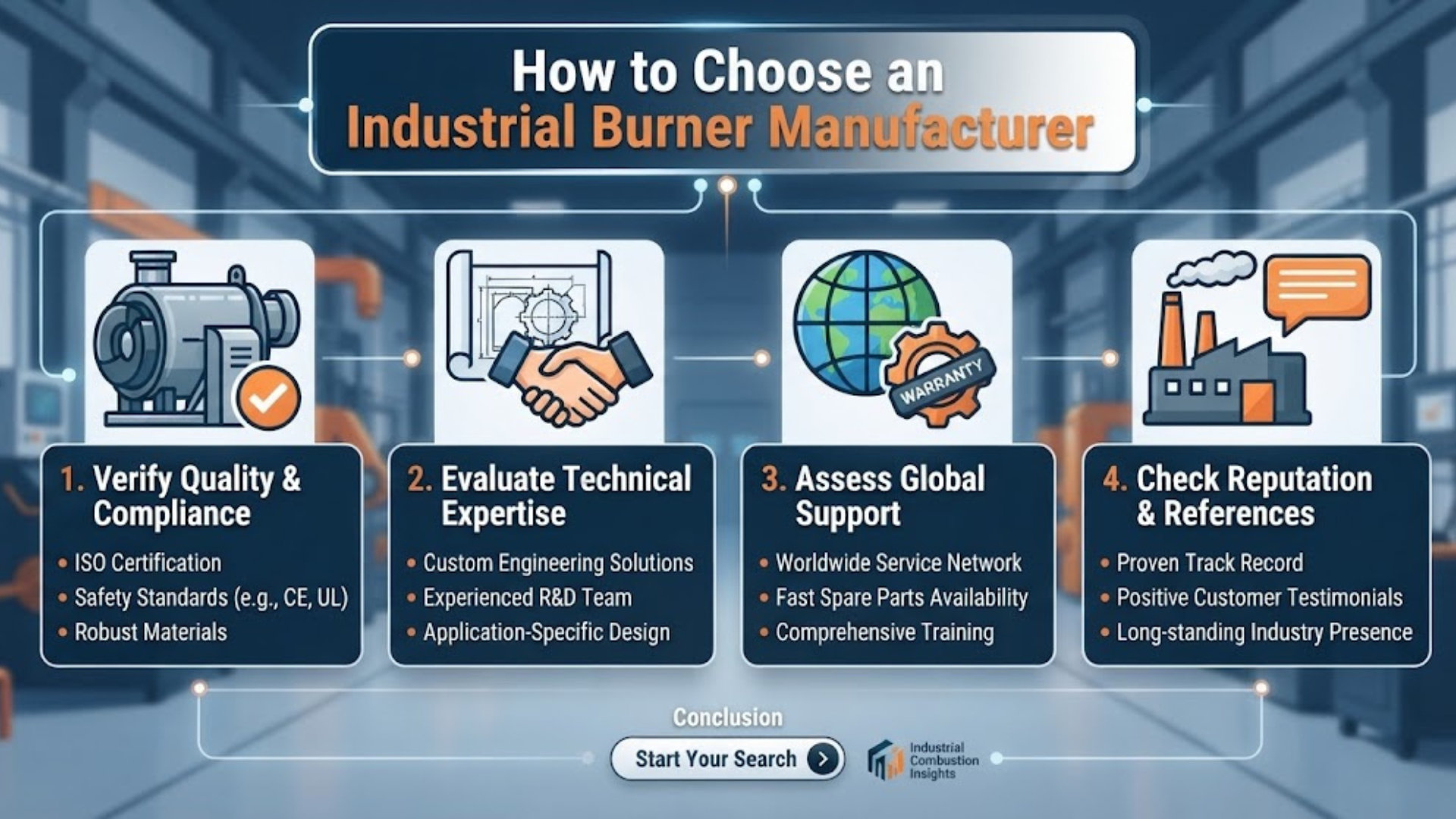
Choosing the right industrial burner manufacturer can make all the difference for your business. You want a partner who not only delivers reliable, efficient burners but also understands your specific needs and challenges.
But with so many options out there, how do you find the manufacturer that fits your operation perfectly? You’ll discover the key factors to consider—from fuel type and heat requirements to compliance and service support. Keep reading to ensure you make a smart, confident choice that keeps your facility running smoothly and cost-effectively.
Assess Industrial Needs
Assessing your industrial needs is the first step in choosing the right industrial burner manufacturer. Understanding specific requirements helps find a burner that fits your operation perfectly. This process reduces risks of inefficiency and high costs. It also ensures safety and compliance with regulations.
Identify Application Types
Start by listing the types of industrial applications you operate. Different burners suit different processes, like heating, drying, or melting. Knowing the exact application helps narrow down manufacturers who specialize in your field. Each application has unique demands on burner design and performance.
Calculate Heat Output
Calculate the heat output required for your operations. This measurement is crucial to avoid under- or over-sizing the burner. Too small a burner wastes time and energy. Too large a burner increases fuel costs and wear. Accurate heat calculation improves efficiency and saves money.
Determine Fuel Preferences
Determine which fuel types are available and preferred at your site. Common fuels include natural gas, propane, oil, or electricity. Fuel choice affects burner design and operating costs. Some manufacturers may offer burners optimized for specific fuels. Understanding fuel preferences helps select the right manufacturer.
Check Manufacturer Expertise
Choosing the right industrial burner manufacturer means checking their expertise carefully. This ensures the equipment meets your needs and lasts long. Experts bring knowledge and skills that improve product quality. They help solve problems quickly and provide reliable service. Understanding their expertise can save time and money.
Review Industry Experience
Check how long the manufacturer has worked in the industry. More years usually mean better knowledge of burner systems. Experienced manufacturers understand different applications and challenges. They have proven track records and customer feedback. This shows they can deliver reliable products for your specific needs.
Evaluate Technical Support
Technical support is vital after purchasing a burner. Good manufacturers offer fast and clear help. They assist with installation, maintenance, and troubleshooting. Access to expert advice reduces downtime and repair costs. Confirm the support team is skilled and reachable when needed.
Consider Custom Solutions
Not all industries have the same burner needs. Some require unique designs or special features. Choose a manufacturer who offers custom solutions. They adapt products to fit your exact requirements. Customization improves performance and efficiency in your operation. It also ensures compliance with industry standards.
Evaluate Burner Performance
Evaluating burner performance plays a vital role in selecting the right industrial burner manufacturer. It ensures the equipment meets your specific needs and operates efficiently. Understanding how the burner performs can save costs and improve safety. Focus on key factors such as combustion efficiency, reliability, and maintenance demands. These aspects influence the burner’s overall effectiveness and lifespan.
Analyze Combustion Efficiency
Combustion efficiency measures how well the burner converts fuel into heat. Higher efficiency means less fuel waste and lower operating costs. Check the burner’s specifications for efficiency ratings. Look for models that minimize unburned fuel and harmful emissions. Efficient burners reduce environmental impact and improve energy use.
Assess Reliability And Durability
Reliable burners operate consistently without frequent breakdowns. Durable burners withstand harsh industrial conditions. Ask about materials used and build quality. Find out the average lifespan and failure rates. Reliable and durable burners reduce downtime and repair expenses.
Examine Maintenance Requirements
Maintenance needs affect the total cost of ownership. Choose burners that require simple and infrequent servicing. Check if parts are easy to access and replace. Consider the availability of technical support from the manufacturer. Lower maintenance demands save time and money over the burner’s life.

Credit: www.alibaba.com
Confirm Compliance Standards
Confirming compliance standards is essential when choosing an industrial burner manufacturer. Compliance ensures the burner meets legal and safety requirements. It protects your business from fines and operational disruptions. It also guarantees the burner operates efficiently and safely. Checking compliance means reviewing emissions, safety, and international standards. Each plays a critical role in the burner’s quality and reliability.
Review Emissions Regulations
Emissions regulations control the pollutants released by industrial burners. These rules vary by region and industry. Confirm the manufacturer’s products meet local and national emissions limits. Ask for documentation proving compliance with environmental laws. A burner that follows emissions standards reduces pollution and helps avoid penalties. It also supports your company’s environmental responsibility.
Check Safety Certifications
Safety certifications prove the burner meets strict safety requirements. Look for recognized certifications such as UL, CE, or FM approval. These ensure the burner has been tested for safe operation. A certified burner reduces risks of accidents and equipment damage. Verify the manufacturer provides clear safety documentation with each product.
Consider International Standards
International standards ensure consistent quality across countries. Standards like ISO 9001 show the manufacturer follows quality management practices. Other standards, like IEC or API, apply to industrial burners specifically. Choosing a manufacturer that meets these global standards means reliable and high-quality equipment. It also eases integration with international projects and suppliers.
Compare Pricing And Value
Comparing pricing and value is crucial when selecting an industrial burner manufacturer. The cheapest option may not always offer the best return on investment. Consider all costs, benefits, and services before making a decision. This ensures you get the right balance between upfront expenses and long-term performance.
Analyze Initial Costs
Start by reviewing the purchase price of the burner. Include installation fees and any extra charges. Request detailed quotes from multiple manufacturers. Check what is included in the price. Avoid hidden costs that could increase your spending later.
Consider Long-term Savings
Look beyond the initial price. Assess energy efficiency and fuel consumption rates. A more efficient burner reduces operating costs. Lower maintenance needs also save money over time. Calculate potential savings to understand the true value.
Look For Warranty And Support
Check the warranty period and coverage. Good warranties protect your investment and reduce repair costs. Also, evaluate the manufacturer’s customer support. Reliable service can minimize downtime and keep your operation running smoothly.
Explore Customer Feedback
Exploring customer feedback provides valuable insight into the reliability and quality of an industrial burner manufacturer. Real experiences from other buyers reveal how well the manufacturer meets expectations. This helps you avoid costly mistakes and choose a trusted supplier. Focus on honest opinions and specific examples to understand product performance and service.
Read Testimonials And Reviews
Check testimonials on the manufacturer’s website and third-party platforms. Look for detailed comments about product quality, delivery times, and customer service. Pay attention to repeated praise or complaints to spot trends. Reviews from similar industries offer relevant information. Positive feedback shows reliability. Negative reviews may reveal hidden issues.
Request Case Studies
Ask the manufacturer for case studies that show their burners in action. Case studies provide a clear view of how products perform under real conditions. They highlight the solutions offered for specific challenges. This helps you see if the manufacturer can handle your unique needs. Case studies also demonstrate their expertise and problem-solving skills.
Seek Industry References
Request references from clients within your industry. Contact these clients to ask about their experience with the manufacturer. Inquire about product durability, support, and overall satisfaction. Industry references offer trustworthy feedback from professionals who face similar demands. Their opinions carry more weight and help confirm your choice.
Assess After-sales Service
Assessing after-sales service is crucial when selecting an industrial burner manufacturer. Good after-sales support ensures your equipment runs smoothly and lasts longer. It also helps reduce downtime and repair costs. Focus on the manufacturer’s commitment to customer care beyond the initial sale.
Evaluate Training Options
Check if the manufacturer offers training for your team. Proper training helps operators use the burner safely and efficiently. Training may include on-site sessions or online courses. Ensure the training covers maintenance and troubleshooting. Well-trained staff can prevent mistakes and extend equipment life.
Check Availability Of Spare Parts
Ask about the availability of spare parts. Fast access to parts reduces downtime during repairs. Confirm if the manufacturer stocks common components. Also, find out how quickly they can deliver parts. Reliable spare parts support keeps your operations running without delay.
Consider Technical Assistance
Technical assistance is vital for solving problems quickly. Find out if the manufacturer provides 24/7 support. Check if they offer phone, email, or on-site service. Quick responses help minimize production losses. Good technical support builds trust and ensures smooth operation.
Credit: www.skyquestt.com
Frequently Asked Questions
What Factors Determine The Best Industrial Burner Manufacturer?
The best manufacturer offers quality, reliability, and compliance with safety standards. They provide custom solutions and excellent customer support. Consider their industry experience and client reviews for trustworthy service.
How To Assess An Industrial Burner’s Fuel Compatibility?
Check if the burner supports your specific fuel type, such as natural gas, oil, or biomass. Proper fuel compatibility ensures efficient combustion and reduces maintenance issues.
Why Is Combustion Efficiency Important In Choosing Burners?
High combustion efficiency saves fuel and reduces emissions. Efficient burners lower operating costs and meet environmental regulations, making them ideal for industrial applications.
How Do Emissions Regulations Impact Burner Selection?
Burners must comply with local and international emissions standards to avoid fines. Manufacturers offering low-emission technologies help maintain environmental compliance and sustainability.
Conclusion
Choosing the right industrial burner manufacturer takes careful thought. Focus on experience, quality, and support. Check if they meet safety and efficiency standards. Think about your fuel type and heat needs. Ask about maintenance and warranty services. A good manufacturer will help your operations run smoothly.
Take your time to compare options. This will lead to better performance and fewer problems. Selecting wisely saves money and ensures long-term success.