

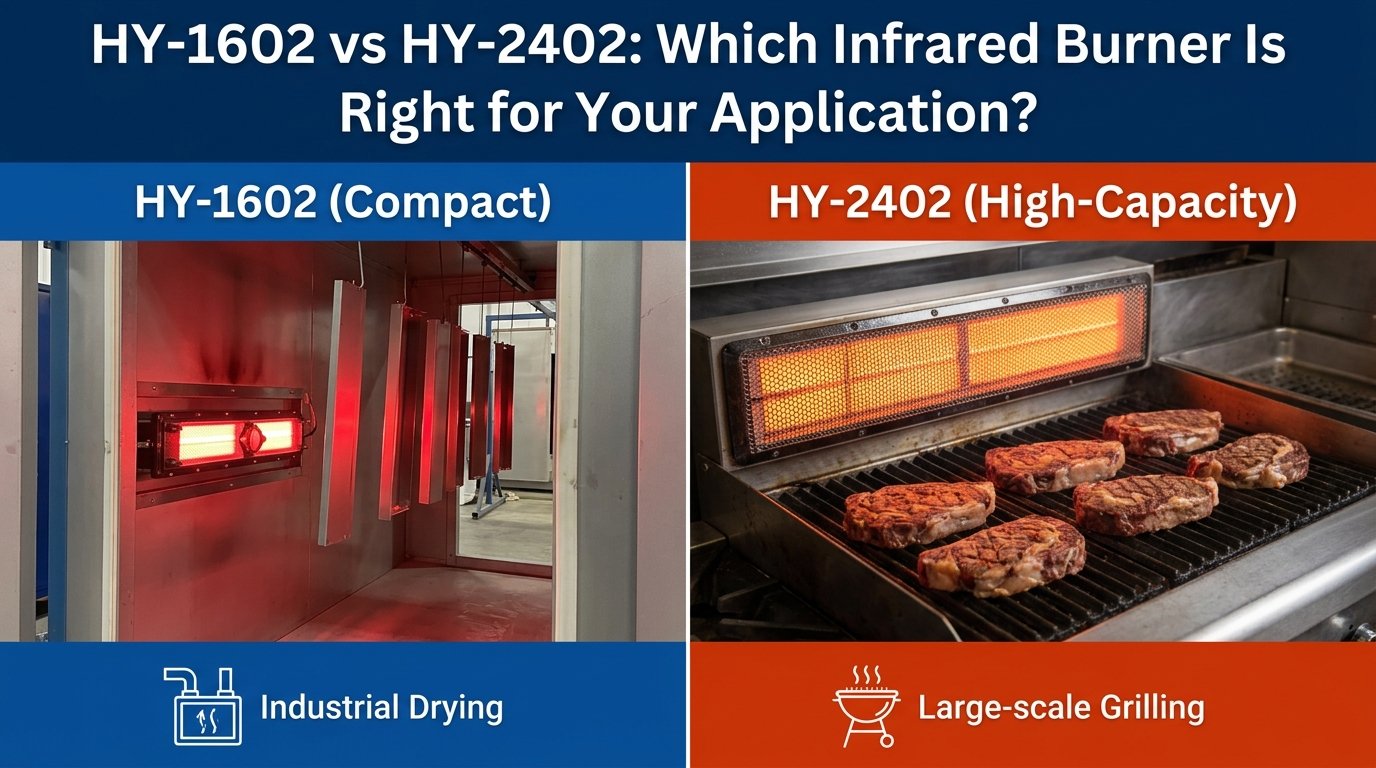
The HY-1602 is the better choice for smaller, residential grilling setups, while the HY-2402 is the stronger option for high-volume commercial searing. The right choice depends on the surface area you need to cover and your total heat output requirements. Selecting the right burner determines how evenly your food cooks and how much fuel you consume. If you have a compact grill, the smaller unit is sufficient; if you’re cooking for a crowd, the larger model is necessary.
Choosing the right infrared burner for your application
The primary difference between these units is the ceramic surface area, which directly dictates the maximum BTU output and the size of the searing zone.
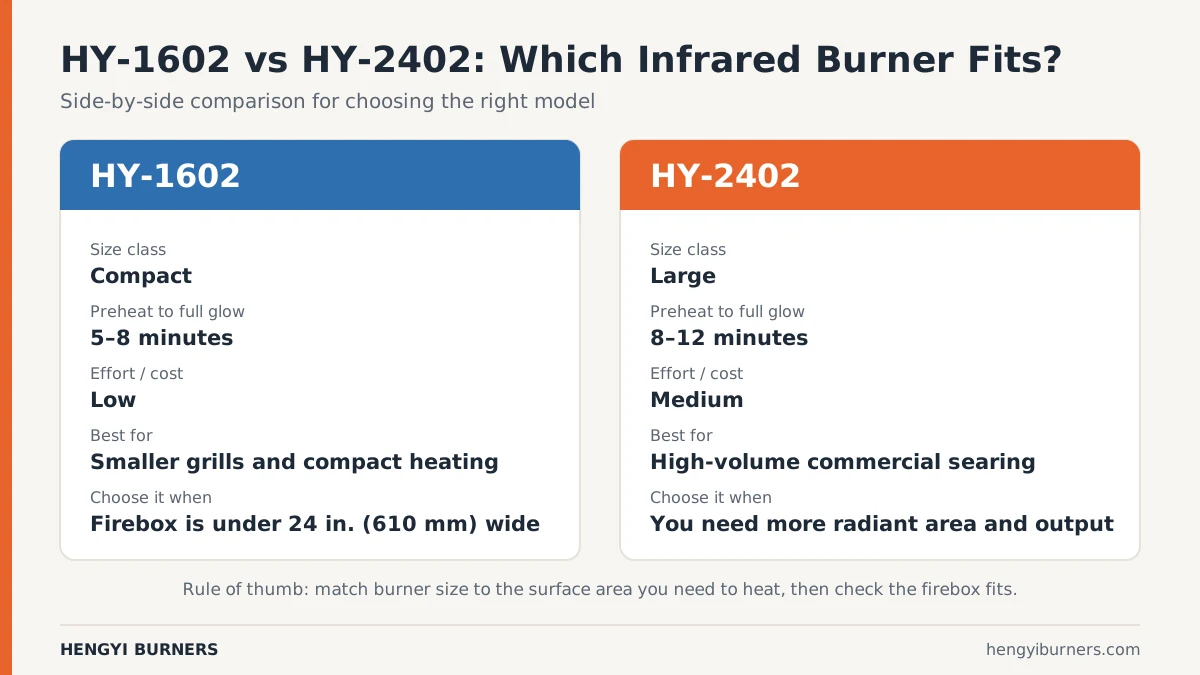
| Method | How long | Effort | Cost | Best for |
|---|---|---|---|---|
| HY-1602 | 5-8 minutes | Low | Low | Home grilling |
| HY-2402 | 8-12 minutes | Medium | Medium | Commercial use |
Note: Preheating times assume a standard outdoor ambient temperature of 70°F; for cooler weather, allow an additional 3-5 minutes for the ceramic to reach peak intensity.
Compact Ceramic Heating
This method uses a smaller ceramic tile array to focus heat on a concentrated area. It’s ideal for searing single steaks or smaller portions without wasting excess fuel.
- Connect the gas line to the burner intake and check for leaks using a soapy water test as recommended by the Consumer Product Safety Commission.
- Turn the control valve to the “High” position and ignite the pilot.
- Allow the ceramic to glow a uniform orange for 7 minutes before placing food on the grates.
- Adjust the valve to “Medium” once the surface reaches the desired sear.
This burner is excellent for maintaining consistent heat on small grills. However, it isn’t for those who need to sear multiple large cuts of meat at once, as the limited surface area causes cold spots if you overcrowd the grate. This varies by model — check the label for your specific BTU rating.
High-Output Commercial Searing
The larger unit is designed for professional environments where speed and surface coverage are the main priorities for the chef.
- Ensure the gas supply line is sized correctly for the higher flow rate required by this model.
- Open the primary gas valve fully to feed the larger array of ceramic ports.
- Use an electronic igniter to light the unit and wait 10 minutes for the full surface to heat evenly.
- Place the meat directly over the center of the radiant heat zone.
- Monitor the internal temperature using a probe to ensure you follow safe minimum internal temperatures published by FoodSafety.gov.
This method provides a powerful, even sear across a wide area. A common mistake is failing to clean the ceramic ports after heavy grease drippings, which can clog the burner and lead to uneven flames; this costs you efficiency and reduces the lifespan of the ceramic. This isn’t for users with small propane tanks, as the high consumption rate will drain them quickly.
Radiant Heat Efficiency
This approach relies on the infrared spectrum to cook food directly without heating the surrounding air. It’s the gold standard for achieving a crust on protein.
- Clear the grate area of any debris before starting the burner.
- Set the ignition to “High” and wait until the entire ceramic face turns bright red.
- Place food on the rack, ensuring it’s at least 3 inches from the ceramic face to avoid charring.
- Flip the food once the bottom side releases easily from the grate.
- Turn the burner off immediately after use to protect the delicate ceramic tiles from moisture buildup.
Always consult the manufacturer’s installation manual to ensure your ventilation meets national standards for indoor or covered outdoor use. The main strength here is the speed of the Maillard reaction. A trade-off is the vulnerability of the ceramic; if you drop heavy items on the burner, the tiles can crack, which is a permanent failure.
Which one should you use?
If you’re in a hurry, choose the HY-1602. Its smaller surface area reaches operating temperatures faster, allowing you to start cooking within minutes. This is perfect for quick weeknight meals where you don’t want to wait for a large grill to heat up.
If you’re doing this for the first time, choose the HY-1602. The smaller unit is more forgiving to handle and requires less complex gas plumbing, making it the safer starting point for a novice. It’s easier to control the heat intensity because the total output is lower.
If you want the best possible result whatever it takes, choose the HY-2402. The larger radiant surface provides a professional-grade sear that covers the entire width of a steak or a large rack of ribs. While it requires more setup and careful monitoring of fuel levels, the uniform heat distribution is unmatched for high-end culinary results.
The main trade-off is between convenience and capacity: the smaller unit offers ease of use and speed, while the larger unit offers the power needed for bulk cooking. If your grill is smaller than 24 inches wide, the HY-2402 will likely be too large to fit the firebox properly, forcing you to choose the smaller model regardless of your preference.
The rules that apply whichever way you choose
Regardless of the model, you must ensure the gas pressure regulator is set to the manufacturer’s specification. Always check the connection points every season to ensure no seals have degraded. If you notice a yellow flame instead of blue or orange, stop using the unit immediately; this indicates incomplete combustion, which can lead to carbon monoxide buildup. Contact a certified gas technician to inspect your lines if you’re unsure about the pressure or flame quality.
Always keep a fire extinguisher rated for grease fires nearby when using high-heat infrared equipment. Preparation is the key to safety: ensure your workspace is free of flammable liquids and that the burner is placed on a non-combustible surface. Check the burner partway through your cooking process to ensure no debris has fallen onto the ceramic, as this can create hotspots. At the end of your session, allow the burner to cool completely before covering it, as trapping residual moisture can damage the ceramic tiles. If you lack the tools to check gas pressure or install the gas line, don’t attempt the installation yourself; hire a licensed plumber or gas fitter to ensure the setup is code-compliant.
Frequently asked questions
Can I use these burners indoors?
No, you can’t use these burners indoors unless your space is specifically designed for commercial cooking with an industrial-grade ventilation hood. These units produce significant amounts of heat and carbon monoxide, which pose a severe risk in enclosed residential spaces. Always verify that your installation complies with local building codes, which are often stricter than standard residential grill requirements.
How long does the ceramic last?
The ceramic tiles typically last for several years under normal conditions, but this depends entirely on how you maintain them. Avoid dropping heavy grates onto the burner, as the ceramic is brittle and will crack under impact. If you notice the ceramic crumbling or large chunks missing, the burner efficiency will drop, and it’s time to replace the component to ensure safe operation.
Is it safe to leave the burner unattended?
No, you should never leave an infrared burner unattended while it’s lit. Because these burners reach very high temperatures in a short time, food can go from perfectly seared to burnt in seconds. Constant monitoring is required to manage the intense heat and to ensure that grease flare-ups don’t get out of control during the cooking process.
What happens if the ceramic gets wet?
If the ceramic gets wet, it can crack or shatter when you heat it up because the trapped water turns to steam and expands rapidly. Always keep a cover on your grill when it isn’t in use to protect the burner from rain or morning dew. If the burner does get wet, allow it to air dry for at least 24 hours before attempting to ignite it.
Why is my burner flickering?
Your burner is likely flickering because there’s air in the gas line or the ceramic ports are partially blocked. First, ensure your gas tank isn’t nearly empty, as low pressure causes unstable flames. If the tank is full, inspect the ceramic surface for food residue and gently clean it with a soft brush once the unit is completely cool to restore steady airflow.
Final Thoughts
Choosing the right burner doesn’t have to be complicated once you identify your primary cooking goals. Take a moment to measure your grill’s space today, as that’ll help you make the perfect decision for your kitchen. You’ll be ready to enjoy consistent, delicious results every time you fire up your grill.
Get the Right Parts from Hengyi Burners
Hengyi Burners manufactures infrared gas burners and burner components in Zhaoqing, China. See the HY-1602 infrared gas burner and HY-2402 infrared gas burner, or browse all infrared gas burners. Contact our team with your fuel type, supply pressure and heating area, and we will recommend a setup and send a quote.
Related guides
2 thoughts on “HY-1602 vs HY-2402: Which Infrared Burner Is Right for Your Application?”