
If you’re part of a Korean manufacturing company, you know how crucial efficient and reliable heating solutions are for your production lines. Industrial infrared burners could be the game-changer your operations need.
These burners deliver fast, uniform heat directly to your materials, helping you save energy while boosting productivity. Imagine cutting down your processing times and improving product quality—all with a technology designed to fit the unique demands of Korean industries. Ready to discover how industrial infrared burners can transform your manufacturing process?
Let’s dive in.
Credit: hengyiburners.com
Benefits Of Infrared Burners
Infrared burners provide several benefits to Korean manufacturing companies. These burners use infrared radiation to heat objects directly. This method improves heating efficiency and supports precise process control.
Choosing infrared burners enhances production quality while lowering energy use. These advantages make them ideal for various industrial applications in Korea.
Energy Efficiency And Cost Savings
Infrared burners convert most fuel into usable heat. They heat surfaces directly without wasting energy on air heating. This feature lowers fuel consumption and reduces operational costs. Faster heating times mean higher production rates and less downtime. Korean manufacturers can save money while boosting output.
Uniform Heating And Process Control
Infrared burners deliver consistent heat across surfaces. This uniform heating prevents hot spots and material damage. Precise temperature control improves product quality and repeatability. Companies can maintain strict manufacturing standards with ease. Such control is essential for complex industrial processes.
Reduced Emissions And Environmental Impact
Infrared burners produce fewer harmful emissions than traditional burners. Lower fuel use means less carbon dioxide and pollutants released. This reduction helps Korean companies meet environmental regulations. Cleaner operations support a healthier workplace and community. Using infrared technology contributes to sustainable manufacturing.
Applications In Korean Manufacturing
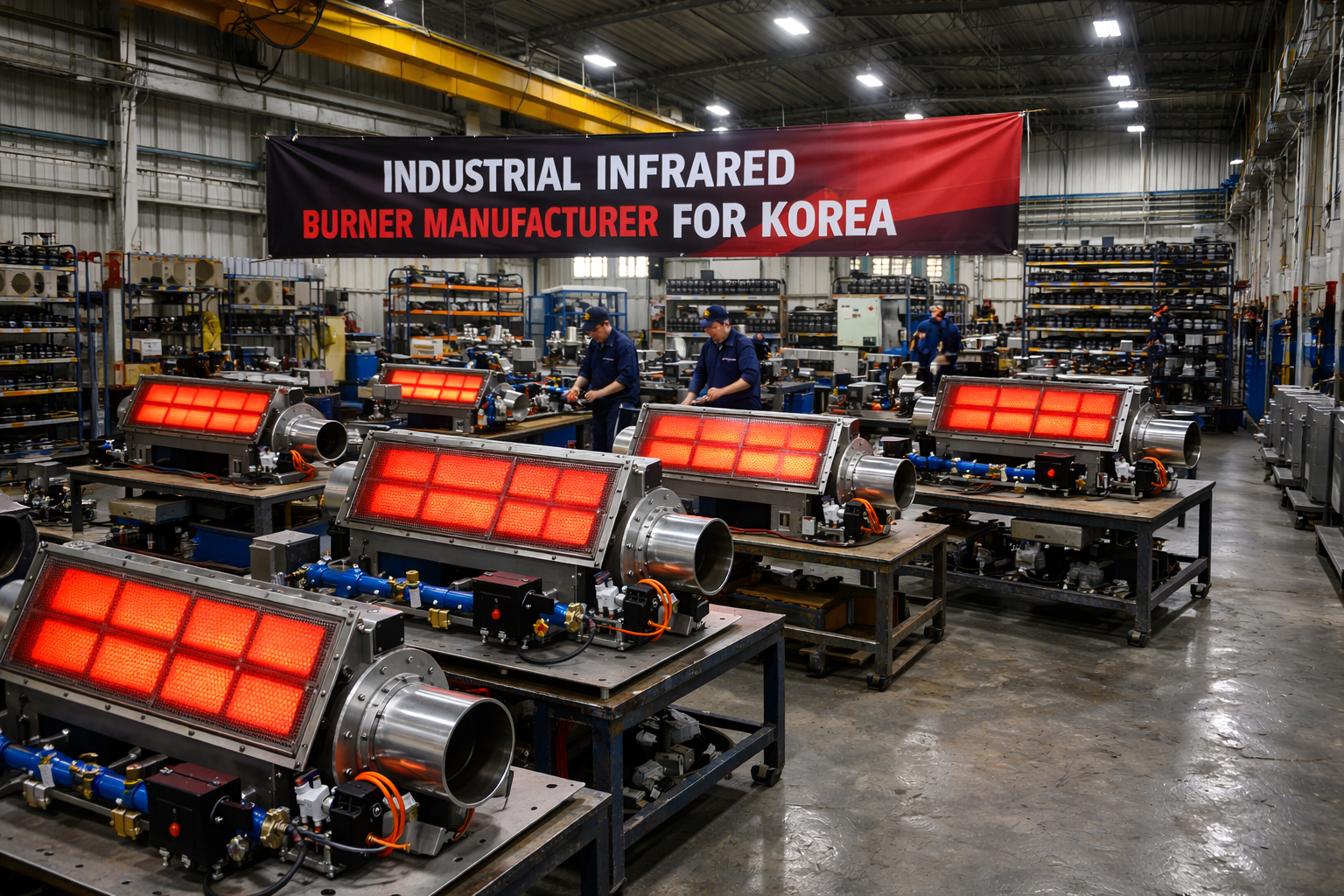
Industrial infrared burners play a vital role in Korean manufacturing. These burners provide efficient, fast, and even heating. This technology suits many industrial processes. Korean factories use infrared burners to boost productivity and quality.
The ability to heat objects directly saves energy and time. Korean manufacturers benefit from better product finishes and lower costs. Below are key areas where infrared burners are widely applied.
Powder Coating And Surface Treatment
Infrared burners offer precise heat for powder coating lines. This ensures coatings cure evenly and strongly. Korean manufacturers achieve smooth, durable surfaces on metal parts. The fast heating reduces cycle times and energy use. Infrared heat improves adhesion and finish quality. It is ideal for automotive parts and electronics housings.
Food Processing And Drying
Infrared burners speed up drying in Korean food factories. They gently remove moisture without damaging products. This helps keep flavor, texture, and nutrients intact. Infrared heat suits snacks, grains, and seafood processing. The burners deliver consistent drying, reducing waste and improving shelf life.
Automotive And Electronics Industries
Infrared burners support precise heating in automotive manufacturing. They cure paints, adhesives, and coatings quickly and cleanly. Korean plants use this technology to increase production speed. In electronics, infrared heat aids in soldering and component drying. This leads to better product reliability and lower defects.
Choosing The Right Infrared Burner
Choosing the right industrial infrared burner is key for Korean manufacturing companies. The burner must fit the specific needs of the process. Efficiency, durability, and fuel type all play a role. A proper selection can reduce costs and improve product quality. Understanding different burner types and installation needs helps make the best choice.
Metal Vs Ceramic Burner Types
Metal infrared burners offer fast heating and good durability. They handle high temperatures well and cool down quickly. Ceramic burners provide more uniform heat and better energy efficiency. They are ideal for delicate processes requiring steady temperature. Choose metal burners for heavy-duty work and ceramic for precision heating.
Fuel Options And Combustion Technology
Infrared burners use natural gas, propane, or other fuels. Natural gas is common for its clean burn and availability. Propane suits remote locations without gas lines. Modern combustion technology reduces emissions and saves fuel. Select a burner with efficient combustion to lower operating costs and meet regulations.
Sizing And Installation Considerations
Proper burner size ensures effective heating without wasting energy. Oversized burners consume more fuel and cause uneven heating. Undersized burners fail to meet process demands. Installation must allow safe fuel supply and ventilation. Space constraints and maintenance access affect burner placement. Work with experts to get correct sizing and installation.

Credit: www.twothousand.com
Maintenance And Safety
Maintaining industrial infrared burners is vital for smooth operation and safety in Korean manufacturing facilities. Proper upkeep extends burner life and ensures reliable performance. Safety measures protect workers and prevent accidents in industrial settings.
Routine Inspection And Cleaning
Check burners regularly for dirt and damage. Clean burner surfaces to remove dust and debris. Inspect gas connections and fuel lines for leaks. Replace worn parts immediately to avoid breakdowns. Keep burners free from soot buildup to maintain efficiency.
Safety Protocols For Industrial Use
Follow all safety guidelines when operating burners. Use protective gear such as gloves and goggles. Ensure proper ventilation to prevent gas buildup. Install safety shut-off valves and alarms. Train staff on emergency procedures and safe handling of burners.
Troubleshooting Common Issues
Identify unusual noises or flame irregularities early. Check fuel supply and pressure for consistency. Clean clogged nozzles to restore proper flame shape. Reset burners if automatic controls fail. Contact experts for complex repairs to avoid damage.
Future Trends In Infrared Heating
Infrared heating is evolving rapidly in the industrial sector. Korean manufacturers must keep up with the latest trends. These advancements improve productivity and reduce costs. The focus shifts towards smarter, greener, and more efficient infrared burners. Understanding these future trends helps businesses stay competitive and meet market demands.
Industrial infrared burners will integrate new technologies and adapt to stricter regulations. This ensures better performance and environmental compliance. Korean companies can expect innovations that enhance burner efficiency and support smart manufacturing systems.
Advancements In Burner Efficiency
Burner designs continue to improve for higher energy efficiency. New materials and engineering methods help reduce heat loss. Infrared burners now deliver more consistent and intense heat. This leads to faster processing times and lower fuel consumption. Manufacturers benefit from reduced operational costs and improved product quality.
Integration With Smart Manufacturing
Infrared burners are becoming part of automated production lines. Sensors and control systems monitor temperature and adjust heat output. This real-time data ensures precise heating and reduces waste. Smart integration allows predictive maintenance, avoiding unexpected downtime. Korean factories gain better control over their processes and improve overall efficiency.
Sustainability And Regulatory Developments
Environmental regulations are shaping the future of infrared heating. Burners must meet stricter emission standards and energy use limits. Manufacturers adopt greener technologies to lower their carbon footprint. Use of cleaner fuels and advanced combustion controls is increasing. These changes support sustainable manufacturing and comply with global regulations.
Local Support And Suppliers
Local support and suppliers are vital for Korean manufacturing companies using industrial infrared burners. Having nearby resources reduces downtime and improves maintenance speed. It ensures quick access to parts and expert help. This support boosts production efficiency and lowers operational risks.
Korean companies benefit from strong local networks offering tailored solutions. These networks connect businesses with reliable suppliers and skilled technicians. Both local and international manufacturers contribute to this ecosystem. Their collaboration provides diverse options and advanced technologies for Korean industries.
Korean And International Manufacturers
Several Korean manufacturers specialize in industrial infrared burners. They understand local market needs and offer customized products. These companies focus on energy efficiency and durability. International manufacturers also supply cutting-edge burner technology. They bring global experience and innovation to Korean factories.
Combining local expertise with international quality creates balanced options. Korean firms can choose burners suited to their specific production lines. This variety helps maintain competitive advantage in global markets.
Service And Technical Support Options
Service centers across Korea provide fast technical support for infrared burners. They handle installation, repair, and routine maintenance tasks. Trained technicians offer on-site assistance and remote troubleshooting. Spare parts are stocked locally to minimize delays in repairs.
Manufacturers often provide training programs for operators and maintenance staff. These programs improve safe and efficient burner use. Regular support helps prevent unexpected breakdowns. It also extends the lifespan of industrial infrared burners.
Case Studies Of Successful Implementations
A Korean automotive parts maker improved heating uniformity using infrared burners. This upgrade reduced fuel consumption and increased production speed. Another food processing company cut drying time significantly by switching to advanced burners. They also lowered emissions and met environmental regulations.
These examples highlight the benefits of local support combined with quality burners. They show how Korean companies can enhance productivity and reduce costs. Real-world success stories encourage wider adoption of infrared burner technology.

Credit: m.made-in-china.com
Frequently Asked Questions
What Are Industrial Infrared Burners Used For?
Industrial infrared burners provide direct and efficient heat. They are commonly used in manufacturing processes like drying, curing, and heating materials uniformly.
Why Choose Infrared Burners For Korean Manufacturing?
Infrared burners offer energy efficiency, faster heating, and precise temperature control. These benefits help Korean manufacturers reduce costs and improve product quality.
How Do Infrared Burners Improve Manufacturing Efficiency?
They deliver consistent heat directly to materials, reducing processing time. This leads to higher production rates and lower energy consumption.
Are Industrial Infrared Burners Environmentally Friendly?
Yes, infrared burners produce fewer emissions compared to conventional burners. Their efficient combustion minimizes fuel use, supporting cleaner manufacturing operations.
Conclusion
Industrial infrared burners help Korean manufacturers save energy and cut costs. They heat materials quickly and evenly, improving product quality. These burners fit many industries, from food processing to metalwork. Choosing the right burner boosts efficiency and supports cleaner production.
Investing in this technology can strengthen Korean manufacturing’s global position. Industrial infrared burners make processes simpler and more reliable. They meet modern demands while reducing environmental impact. Smart heating solutions drive progress in Korea’s factories today.